VPN Reviews: How to Spot Fakes — R-VPN
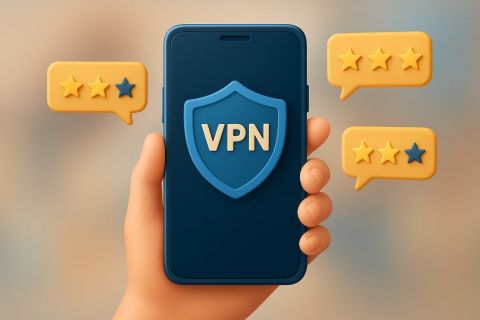
Looking for a reliable VPN and reading reviews? Be careful — VPN reviews and how they get faked — is a topic your safety depends on. In this article we explain why reviews are so easy to fake, and how to tell the truth from the fakery.
Why are fake reviews so popular?
- A VPN maker wants to look more popular — and boosts its rating with fake reviews and "best VPNs of 2025" lists on websites.
- According to forecasts, the share of fake reviews will reach 35–40% by 2025, and consumers could lose up to $200 billion because of it.
- In the VPN industry, fake ratings are routine: companies pay for good reviews to boost trust in their services.
How fakes are made: from AI to manual padding
- They use AI and templates to generate thousands of similar reviews while avoiding obvious automation.
- Orders through freelance platforms or third-party services promising 5-star ratings already operate in the industry.
- VPN providers even buy awards — which no one verifies — to look ultra-reliable.
The danger of free VPNs and fake extensions
- Scam bots create fake VPN clients that can spy on you, collect screenshots and geodata without your knowledge.
- Some "free VPNs" are distributed as malware, for example via GitHub, and contain trojans and spyware and steal data.
- VPNs were found on Google Play that used other services' infrastructure without permission — "scammers scamming other scammers."
What users and experts say
All the "best VPN" sites are a sham; they only promote whoever pays them.
— a Reddit user
The leading review platforms are no longer a reliable source.
How to tell a real review from a fake
- Language
Fake review: generic phrases like "Best VPN," "Works perfectly"
Real review: specifics — speed, problems, pros and cons
- Rating
Fake review: all 5 stars with no criticism
Real review: a 3–5 rating, with explanations
- Posting pace
Fake review: a flood of reviews over 1–2 days
Real review: a gradual flow over time
- Source of reviews
Fake review: only in the app store or on the website
Real review: on forums, Reddit, independent blogs, on social media
- Presence of awards
Fake review: badges with no links or transparency
Real review: awards from reputable media with the criteria explained
What to rely on instead of dubious reviews?
- Look for independent reviews from cyber experts and tech bloggers with no hidden affiliations.
- Check for a no-log policy audit, the date, the author and the format of reviews.
- Follow recent VPN news — for example, about FreeVPN.One (user screenshots), or large-scale infrastructure scams.
Fake reviews create an illusion of safety but often lead to installing low-quality or dangerous VPNs.
Choose a VPN based on:
- Reputation;
- Technical transparency;
- Independent reviews.
If you want to test out different VPN clients, use R-VPN — a reliable service with a transparent policy, reviews and real protection.
Discuss: go to the R-VPN forum